How to take NRF2.
This isn't caffeine. Nothing happens in 20 minutes. Your cells have to read the signal, then build the enzymes. The whole protocol comes down to one rule: take it three hours before a hard session.
One ingredient that matters.
Broccoli seed extract, standardized so every sachet has 30 mg of sulforaphane. Everything else is flavor. Not caffeine, you won't feel it. Not a buffer like bicarb, different job. Not a daily vitamin. Hard days only.
- Per sachet
- 30 mg sulforaphane from 600 mg broccoli seed extract, standardized to 5%
- Mix
- About 300 ml of water. Cold is better.
- Taste
- Like a lemon-ginger shot, but instead of lemon, it’s white citrus–passion fruit with a little spice.
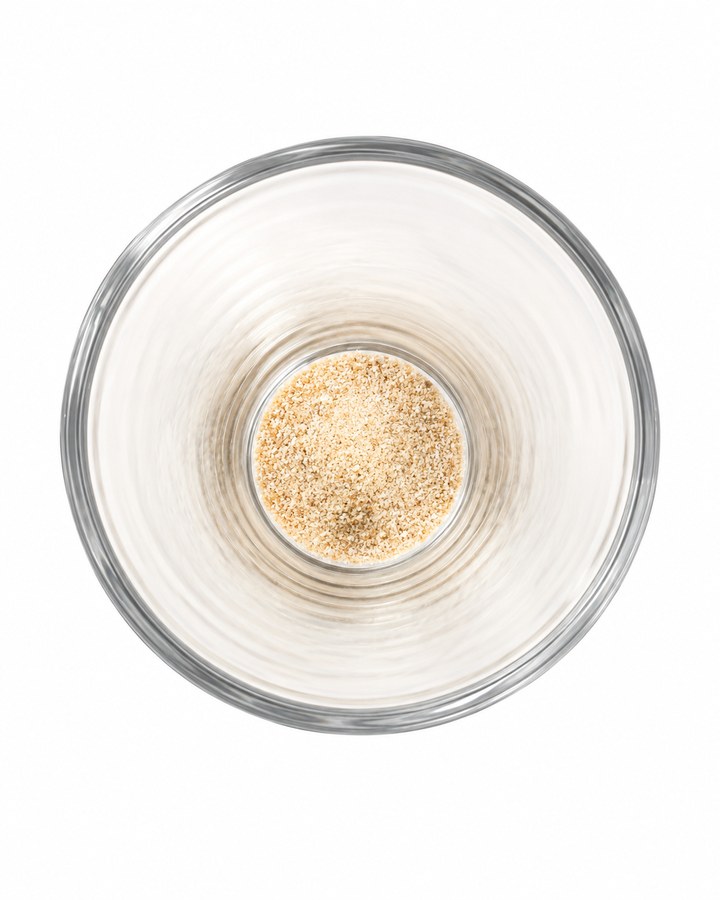
It's a fine powder, so it looks like a lot less than it is.
Three hours before. That's it.
Your antioxidant enzymes after one sachet.
Hard days only. Take it like a tool, not a vitamin.
It does something when there's a leak to clean up. An easy run doesn't make much of one. Two to four sachets a week for most people, that's however many real hard days you have. A pretty normal week looks like this. Yours will look different, the idea is the same.
Yes on race day. Same three hours. It's a hard day, arguably the hardest one. Nothing to feel, just less damage to clean up after. Before is best: be in the system before the free radicals are.
One sachet, three hours before every hard session.
Take it at bed the night before.
Add one an hour before bed.
Skip it.
What does NRF2 actually do?
You don't get fit during the workout. You get fit after. A hard session beats you up, your body repairs the damage and overshoots. Free radicals make that hole deeper. NRF2 is the switch that keeps the cleanup crew ahead of them.
You get fit after, not during.
A hard session beats you up a bit. You're actually worse the next day. Then your body fixes the damage and overshoots, so you end up a little better than where you started. That's the whole game.
Same workout, two different recoveries. You don't dig as deep a hole, and you climb out faster.
Rust, inside a muscle cell.
Oxygen is reactive. That's the point of breathing it, your mitochondria use that reactivity to make energy. The catch is a little of it gets loose one electron short. A molecule with an unpaired electron is a free radical. It's unstable, so it takes an electron from whatever is closest: a membrane, a protein, a piece of DNA. Now that molecule is short one, and the chain moves on.
- Definition
- Oxidative stress is radicals made faster than they're cleared.
- Not a poison
- A balance. Every cell makes some all day. Stress is the tip of the scale.
Not overtraining syndrome. The everyday version.
You need to pay off the credit card before buying something else. Timed right, the next hard day hits when you're back up. Too soon, it hits while you're still down.
Optimized timing and protocol.
The full walkthrough of when to take sulforaphane for endurance performance and recovery. Hard days only, three hours before threshold sessions and races, and how to handle the mornings, doubles and big days that don't fit the rule.
Hard days only. Three hours before. Two to four a week.
One sachet about three hours before. This is the best use. For most people that's 2 to 4 sachets a week, often 2 to 3.
Waking up three hours early isn't ideal. Take it the night before, right before bed. The enzymes are still up in the morning.
Usually once per day is enough. If it's a very big day, a second sachet before bed can help the overnight cleanup.
Don't combine with large doses of vitamin C or E around training. Mix in cool water, not hot, so you don't degrade the active ingredient.
A hard day: drink it about three hours before, then train as planned.